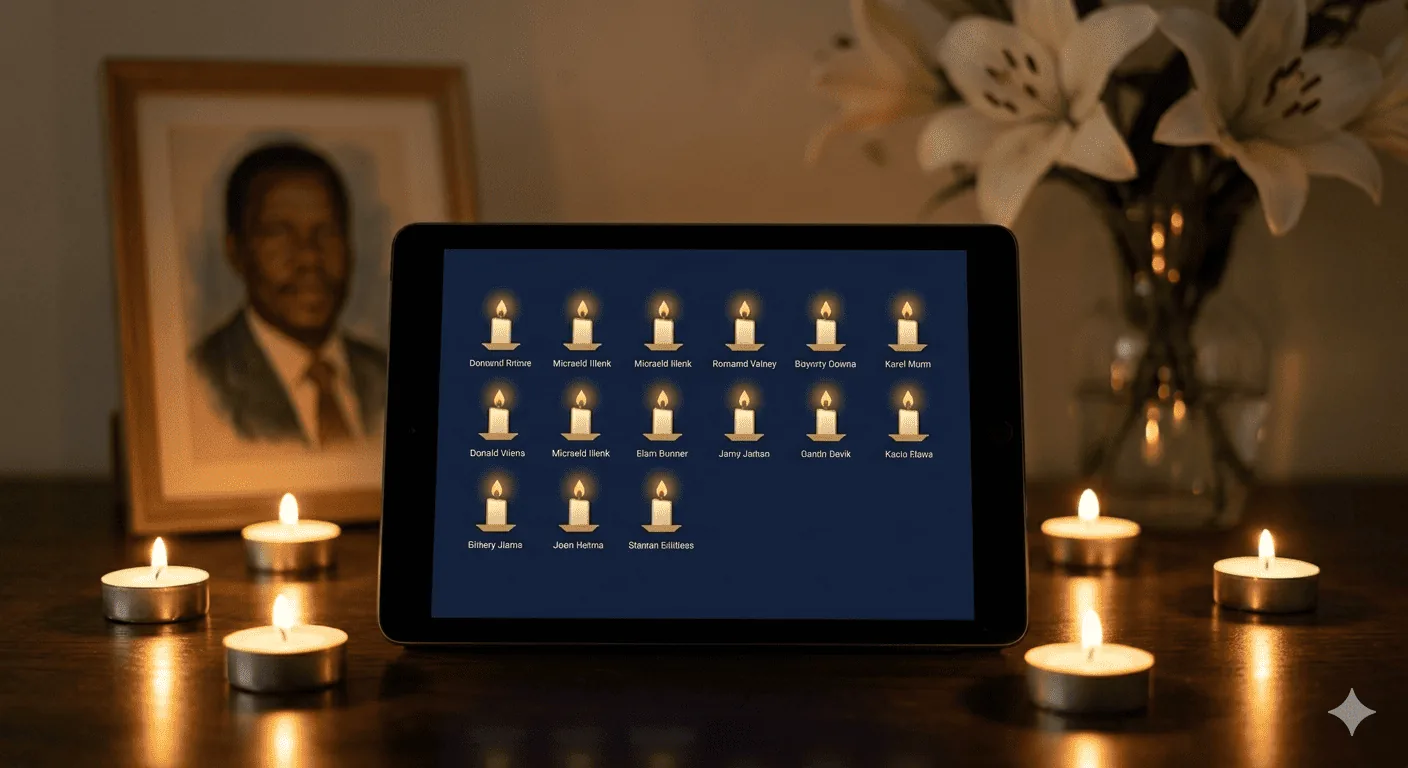
The quietest part of a funeral often comes afterwards: people go home, the house is still, and the family begins reading the messages that came in while everything was happening. A memorial page becomes valuable in that moment because it holds the small acts of support people could not always offer in person. This guide explains those interactions from that human side first, then shows how TributePoint handles them.
Why Interactions Matter
In South African culture, community participation in mourning is essential. Whether it is ubuntu, church fellowship, or a stokvel gathering support, the act of showing up matters. But when family is spread across provinces or even continents, showing up in person is not always possible.
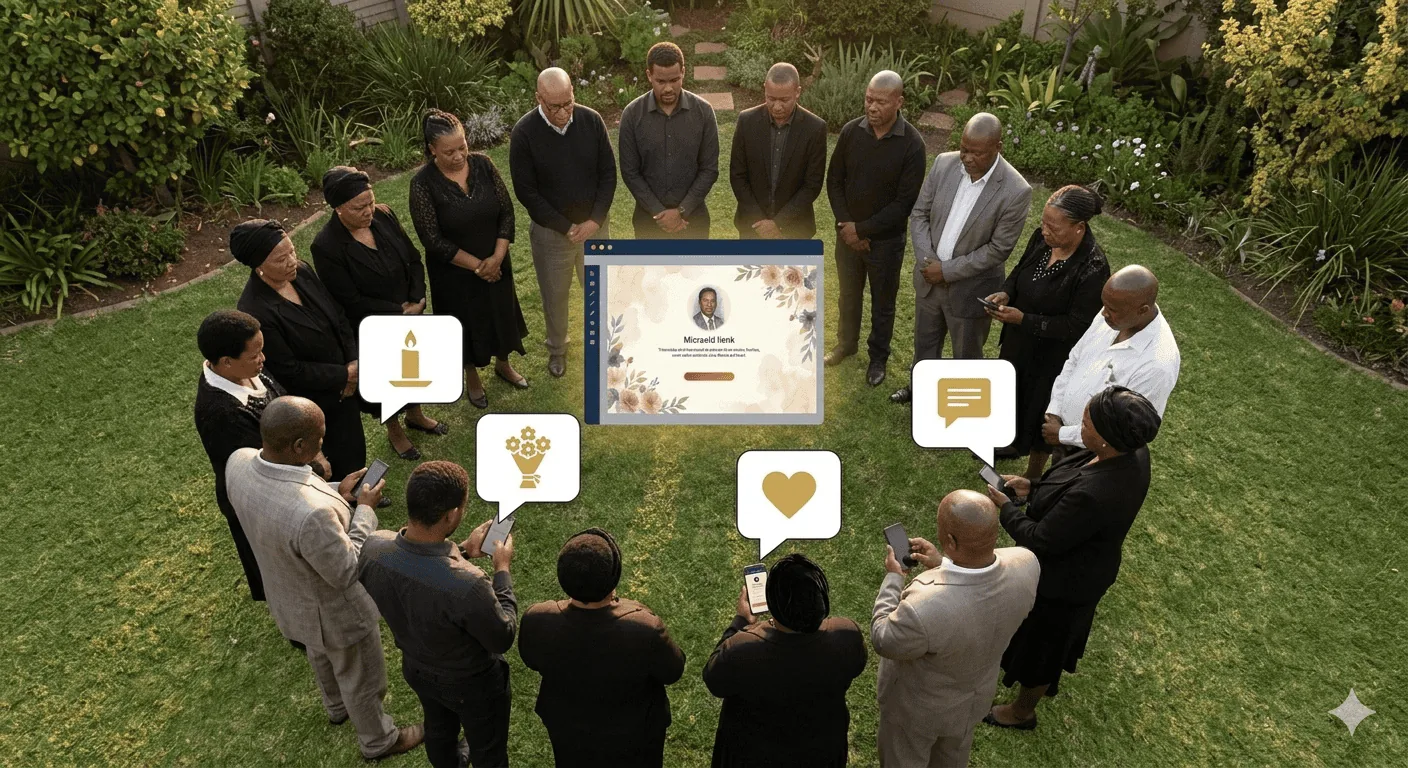
TributePoint’s memorial interactions bridge that gap. A cousin in Cape Town can light a candle. A colleague in London can send flowers. A childhood friend in Durban can write a message that the whole family can read together.
Lighting a Virtual Candle
The candle is often used by people who want to show up quickly and respectfully, even if they do not have the words yet. A neighbour may light one after hearing the news in the evening. A cousin overseas may do it before the livestream begins. It is a small action, but families notice it.
How It Works
Click the “Light a Candle” button on any memorial page. Enter your name and an optional message. The candle appears on the page instantly — a small, warm flame with your name beside it. The candle count on the tribute card updates in real time.
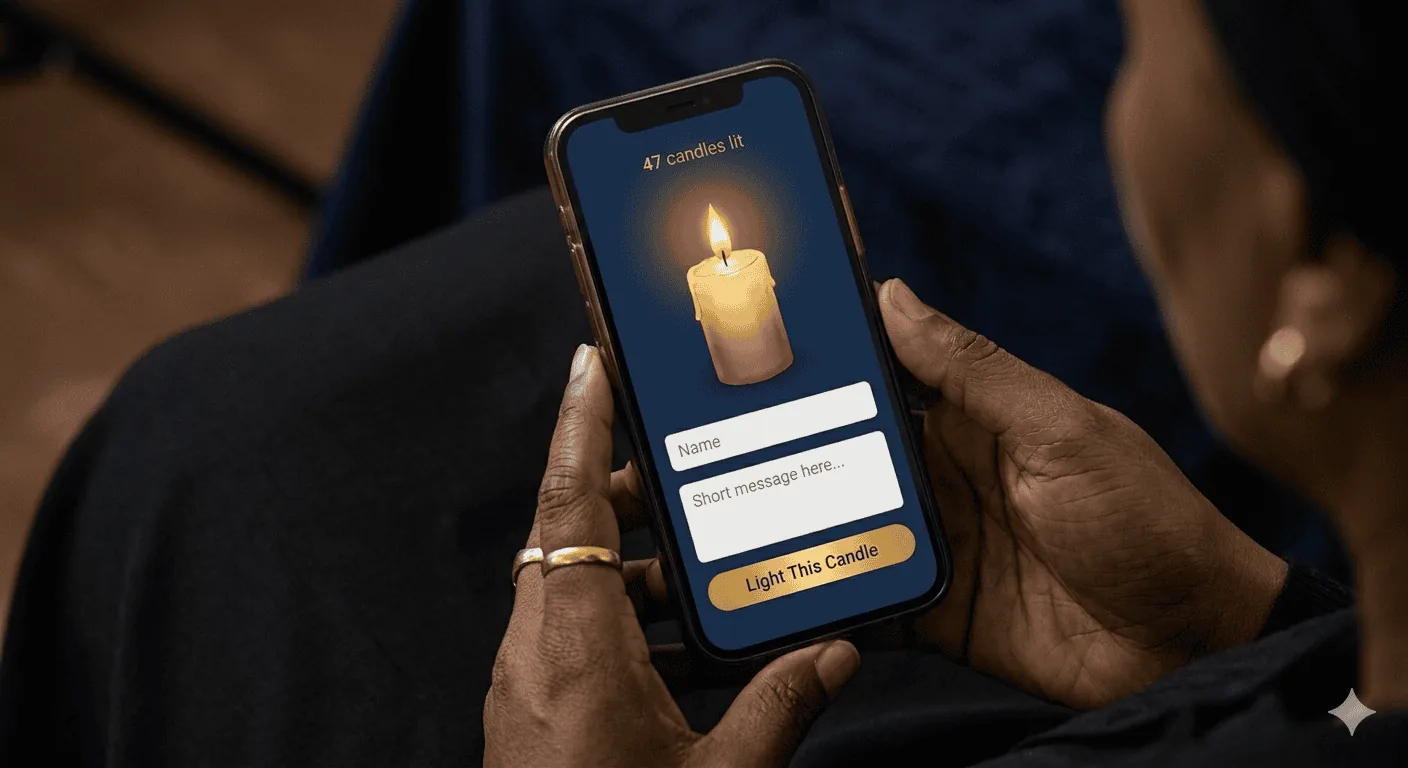
Multiple candles from different visitors create a visual mosaic of remembrance. When the family sees 47 candles lit for their loved one, each with a name and message, it brings genuine comfort.
In many South African traditions, lighting a candle has deep spiritual significance. The digital version carries the same intent — it is a way of saying “I am here, I remember, I care.”
Sending Virtual Flowers
Physical flower arrangements are expensive and logistically challenging, especially when contributors are far away. Virtual flowers on TributePoint are a meaningful alternative.

Click “Send Flowers”, enter your name and a message, and a floral tribute is added to the memorial page. It is visible to all visitors and forms part of the permanent memorial record.
When Flowers Speak Louder
Sometimes words fail us. A person might not know what to write in a condolence message, but sending a floral tribute is a universal gesture of sympathy and respect. It crosses language barriers and cultural boundaries.
Writing a Condolence Message
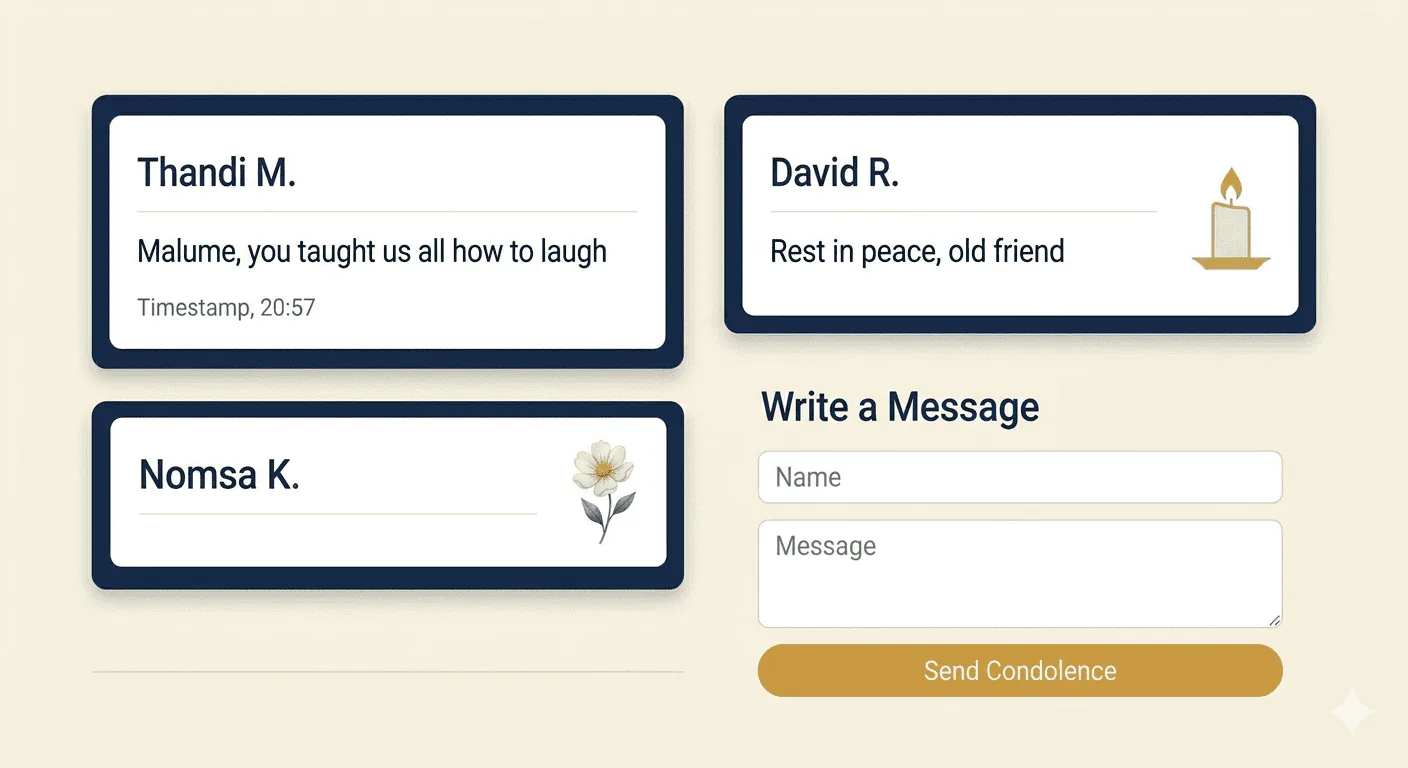
Condolence messages are the most personal interaction. They are open-ended — visitors can write anything from a single sentence to a full page of memories and reflections. In practice, most people write short, specific notes: a memory from church, something the person said at work, or a few honest lines to the family.
What to Write
Many people struggle with what to say. Here are some approaches:
- Share a memory — “I will never forget the time Uncle Sipho taught us to fish at the dam.”
- Acknowledge the loss — “MaNdaba was a pillar of strength for our whole street. We feel her absence deeply.”
- Offer support — “The Dlamini family is in our prayers. We are here for anything you need.”
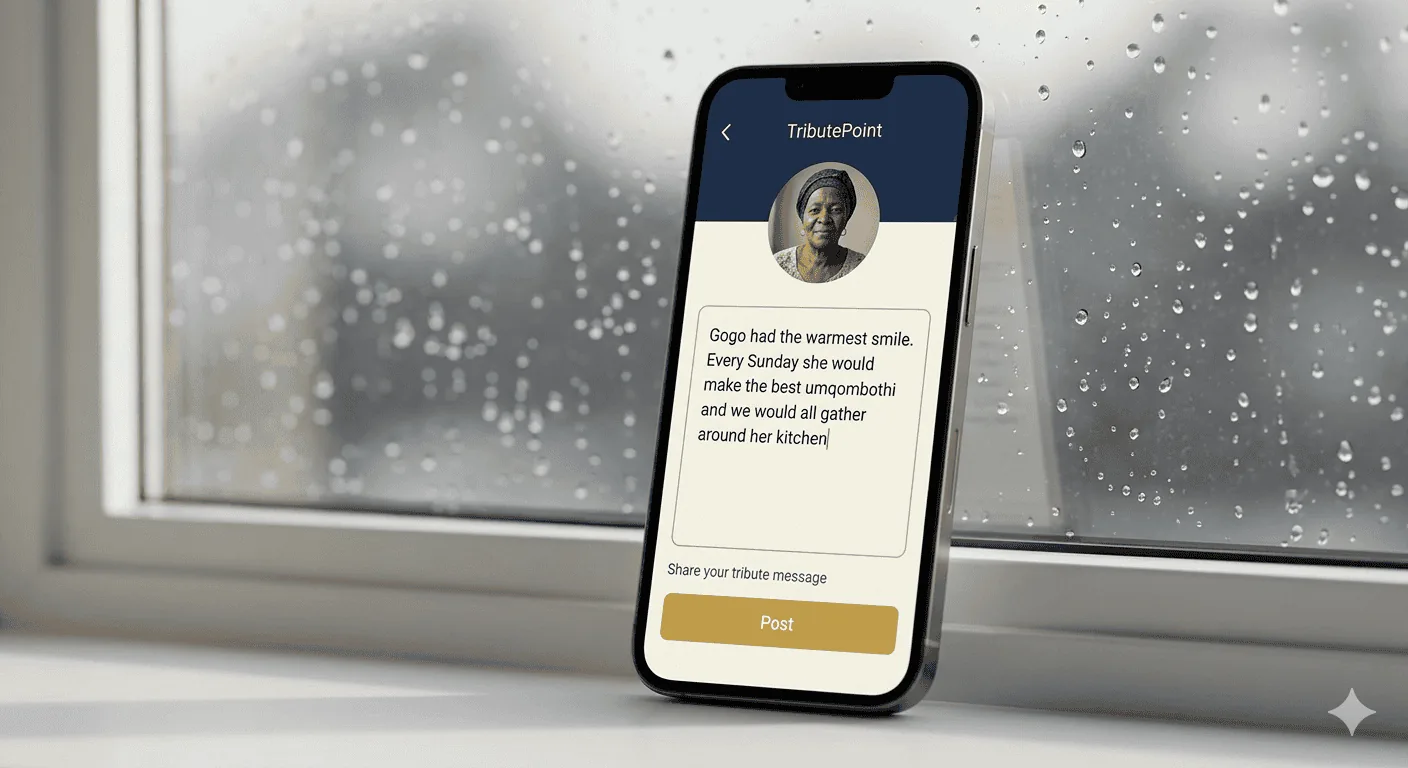
- Express love — “Rest in peace, Gogo. Your grandchildren carry your wisdom every day.”
Reading condolence messages together as a family can be a powerful part of the grieving process. Some families print them out and keep them with the funeral programme as a keepsake.
How Families Often Read These Messages
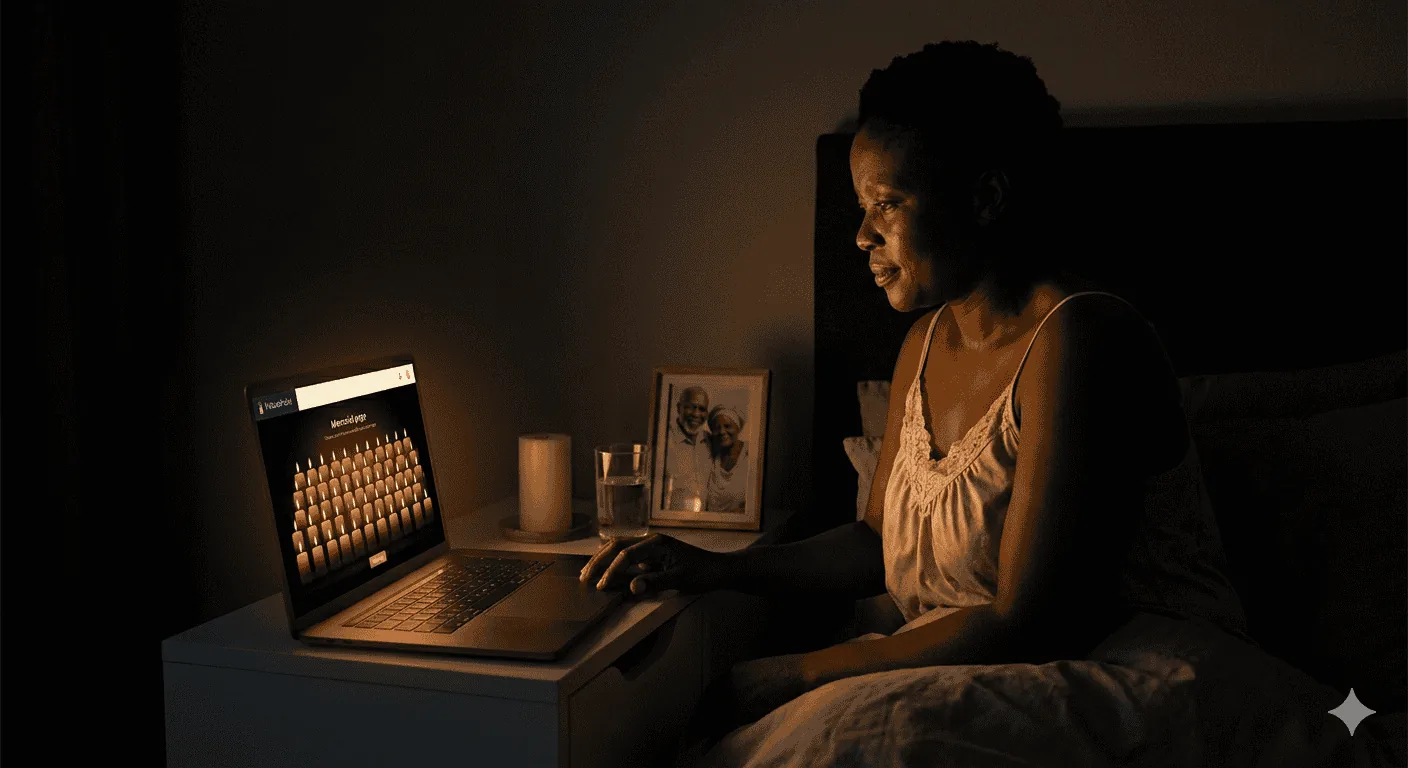
Some families open the memorial page the same night after the funeral tea, when the house has gone quiet and they finally have a moment to breathe. Others wait a few days and read everything together with siblings or children. What matters is that the messages do not disappear into an old chat thread. They remain there when the family is ready.
Messages often become more meaningful after the service than during it. A son may discover a work story he had never heard. Grandchildren may read how their grandmother helped neighbours quietly for years. That is why a memorial page works better than scattered texts: it gathers those memories into one place the family can return to.
Tribute Messages
Beyond individual condolences, TributePoint supports general tribute messages — shorter, social-style interactions that visitors can leave quickly. Think of them as the digital equivalent of signing a condolence book at the funeral home.
No Account Required
This is a deliberate design decision. When someone is grieving and wants to leave a message, the last thing they should face is a registration form. TributePoint lets visitors interact with just a name — no email, no password, no sign-up. That keeps participation easy for older relatives, church members, and people joining from a phone link in WhatsApp.
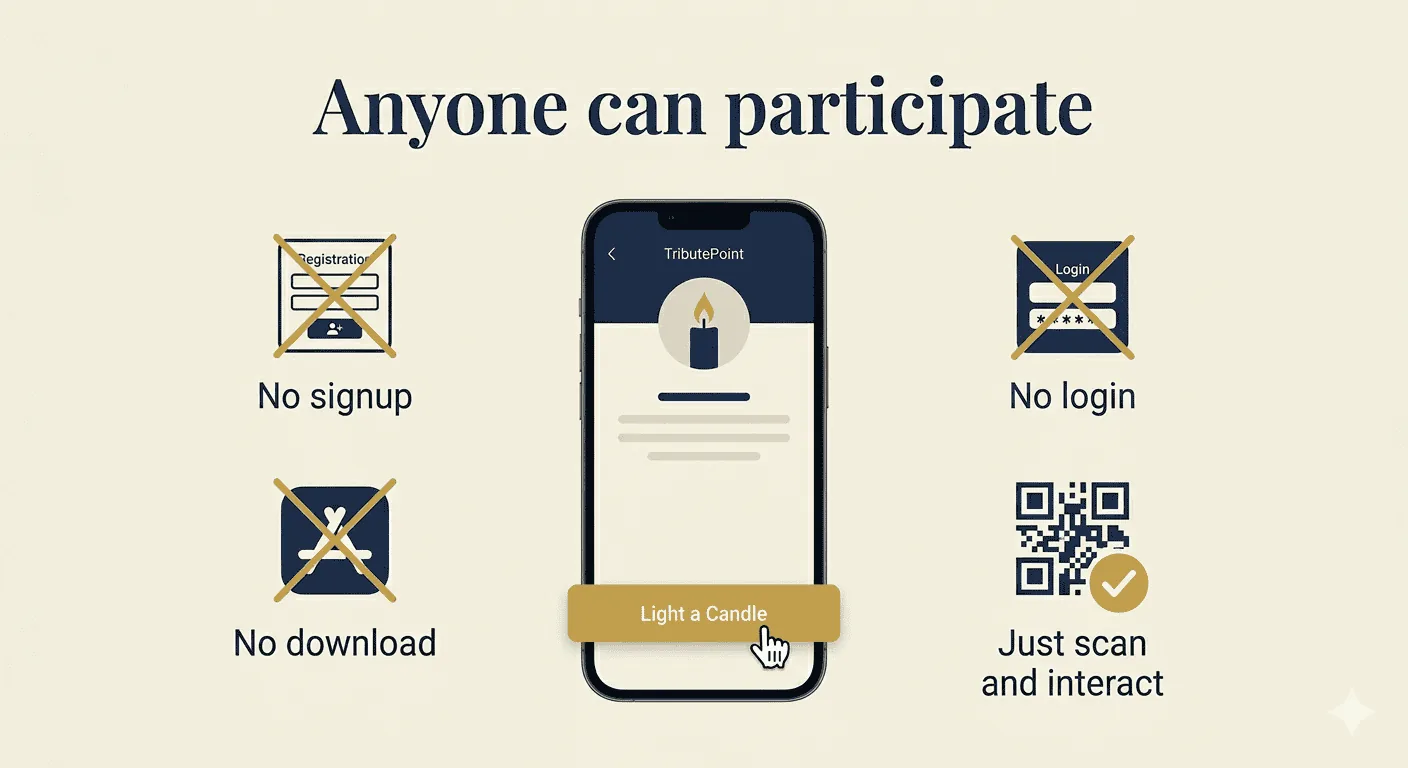
This low barrier means more people participate, and the memorial page becomes a richer, more complete reflection of the community’s love.
Privacy and Light Moderation
Families still need some control. In most cases, the expectation is simple: messages should be respectful, on-topic, and suitable for a grieving household to read. If a page is being shared widely, the family or funeral home should review comments periodically and remove anything inappropriate, promotional, or clearly spammy.
It also helps to set the family’s expectations early. A public memorial page invites broader participation; a more private page shared only with relatives and close friends will naturally feel more intimate. If privacy is a concern, families can combine this with a more controlled sharing plan, as we explain in our guide to sharing a tribute with family far away.
Page View Tracking
TributePoint also tracks unique page views on every memorial. This uses a one-unique-view-per-IP-per-hour system, so refreshes do not inflate the count. The view count appears on the dashboard card alongside the candle count.
For families, seeing that 350 people visited the memorial page is a quiet reassurance that their loved one was not forgotten.

Sharing Interactions
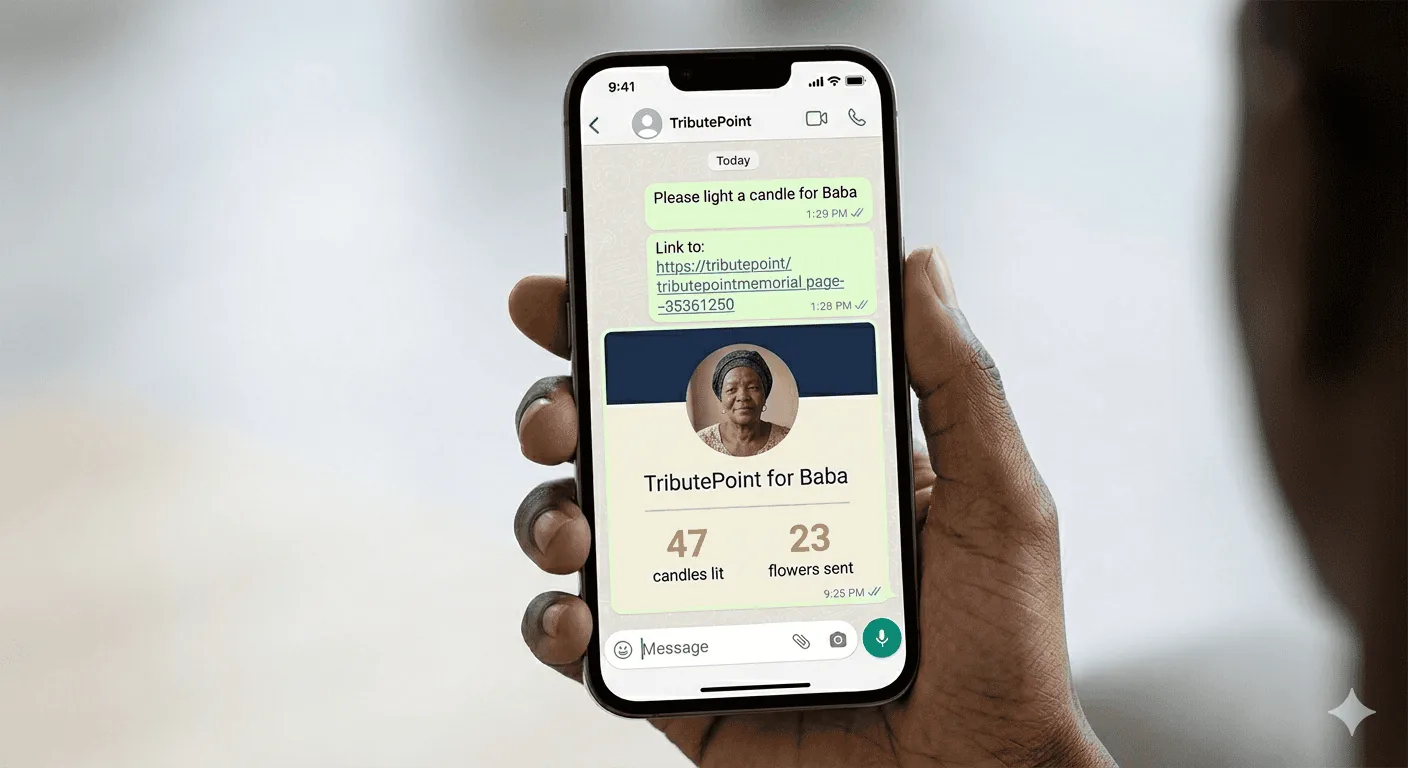
When a memorial link is shared on WhatsApp, Facebook, or X/Twitter, the Open Graph preview card shows the deceased’s portrait along with interaction counts — “47 candles lit, 23 flowers sent”. This social proof encourages more visitors to participate.
How the Family Sees It All
All interactions — candles, flowers, condolences, and messages — are visible in two places:
- The public memorial page — where visitors can read what others have written
- The tribute editor dashboard — where the family or funeral home can manage and review all interactions
The family can see totals, read individual messages, and feel the weight of community support even if they could not be at the funeral in person.
Cultural Traditions of Expressing Condolence in South Africa
Every culture in South Africa has its own way of saying "we are with you" when someone dies. These are not quaint traditions — they are deeply practical systems of support that have kept communities together through centuries of loss.
In Zulu culture, the community does not wait to be asked — they just show up. Women arrive at the family home with food and tea. Men help with logistics: transport, chairs, tents. The phrase "siyakukhala" (we cry with you) is not small talk; it is a declaration that the community carries this grief together. The umkhuleko (night vigil) fills the house with hymns, prayers, and stories about the person who died.
In Xhosa tradition, mourning follows specific rules. Mirrors in the house may be turned to face the wall. The bereaved often wear black for weeks or months. Neighbours bring food, blankets, and household supplies — not because they were asked, but because that is what you do. "Uhambe kakuhle" (go well) is spoken to the deceased, not the living — it is a farewell, a sending-off.
Afrikaans and Christian families tend to express condolence through cards, flowers, and personal visits. Church congregations rally with meal rosters and prayer groups. "Sterkte" (strength) is the word you hear most — short, direct, and deeply felt.
Muslim families follow janazah protocols that prioritise urgency — burial usually happens within 24 hours of death. After that, condolence visits (ta'ziyah) continue for three days. Visitors offer Quranic prayers and practical help. There is no lingering; the community shows up, does what needs doing, and returns the next day to do it again.
Hindu families observe a 13-day mourning period. Visitors bring fruit and flowers — never cooked food — and join the family for evening prayers. A memorial flame (diya) is kept burning throughout. This is why the virtual candle feature resonates so strongly with Hindu families: it mirrors a tradition they already practise at home.
What to Write in a Condolence Message
This is the part most people get stuck on. You hear that someone has died, you open WhatsApp, and your thumbs just freeze. What do you say? How do you avoid sounding hollow?
The trick is to be specific. A generic "sorry for your loss" is not terrible, but it disappears in a sea of identical messages. What actually lands is a real memory, a concrete detail, something only you could write. If you are also writing a longer tribute, our guide on how to write a eulogy offers practical advice. Instead of the default, try something like:
- "I'll always remember how [Name] made everyone laugh at family gatherings." — A specific memory is more comforting than a general statement.
- "[Name] was the first person to welcome me when I joined the company. I'll miss them deeply." — Shows the deceased's impact on others.
- "I know no words can ease this pain, but I want you to know I'm thinking of your family." — Honest acknowledgement of grief.
- "Robala ka kgotso" (Rest in peace in Sesotho) — Using the family's home language shows deep respect and cultural awareness.
Stay away from "everything happens for a reason" or "they're in a better place." You mean well, but to someone in the middle of raw grief, those words can feel like you are minimising what they are going through. Just say what is true: I remember this person, they mattered, and I am here. That is enough. For more on supporting someone through grief, see our dedicated article.
Give People a Place to Leave Something Real
A tribute page helps candles, flowers, and messages stay together in one place so the family can read them when the funeral has passed.
Create a TributeHow Virtual Tributes Fit Into South African Mourning Traditions
Virtual candles and condolence walls are not a replacement for the deeply physical mourning traditions of South African families. They are an extension of them — a way for the people who genuinely cannot be present to take part in something the family will read in the days, weeks and months after the funeral. Below is how this looks across the communities we work with.
For Families With Relatives Abroad
South Africa is a country of large diaspora. Almost every extended family has someone in London, Perth, Toronto, Auckland, Dubai or the US East Coast. When a grandparent dies in Soweto or a sibling dies in Mthatha, the relatives abroad often cannot fly home in time for the funeral — the body must be buried within days under most South African and many religious traditions, and a long-haul flight from Sydney to Johannesburg simply cannot be arranged that quickly. A virtual candle and a written condolence allow these family members to mark the death in real time, even if their physical presence comes weeks or months later. Many families print all the condolence messages and place them in a memory book that the abroad relatives can read when they visit.
For Communities That Already Light Real Candles
In many South African Christian traditions — particularly Catholic, Anglican, ZCC and other African Initiated Churches — lighting a candle for the deceased is already a familiar ritual. The virtual candle is not a substitute for the candle on the home altar; it is an addition for the people who cannot reach the home. We see this most clearly with church groups: the local church members visit and light real candles, while the church members who have moved cities light virtual ones from their phones. Both sets of candles are remembrance, and the family treasures both.
For Muslim Families During the First Three Days
In Islamic mourning tradition, the first three days are the formal period for offering condolences (ta'ziyah) to the bereaved family. Visitors come to the home to sit, pray, and offer comfort. For Muslim South African families with relatives abroad — particularly the strong communities linking Cape Town's Bo-Kaap, Mitchells Plain, Durban's Riverside and overseas Muslim communities — a digital condolence wall allows the abroad family to participate in ta'ziyah within the prescribed three days. Note that in Islamic tradition, candles do not carry religious significance; written du'a (prayers) and condolence messages are more culturally appropriate than the candle metaphor.
For Hindu Families Through the 13-Day Period
For Hindu South African families, the mourning period continues for 13 days after the cremation, culminating in a major prayer ceremony on the 13th day. Lighting a virtual diya (lamp) and leaving a condolence message resonates with the existing tradition of lighting lamps during this period. Family members across Durban, Chatsworth, Lenasia, Laudium and the diaspora often add a candle or message on each significant day — the cremation, the asthi visarjan, and the 13th day prayer.
For Jewish Families During Shiva and the Year of Mourning
In Jewish tradition, the family sits shiva for seven days, observes sheloshim for 30 days, and for the death of a parent continues full mourning for a year. The digital condolence wall is most useful during shiva, when distant relatives and friends who cannot visit the home can leave messages and shared memories. The Hebrew phrase "May their memory be a blessing" / "Zichrono livracha" is the traditional condolence and appears frequently on Jewish memorial pages.
For African Traditional Mourning
For families observing isiZulu, isiXhosa, Sesotho and other African traditional mourning customs, the period after the funeral is marked by quiet, restrained behaviour for the immediate family — sometimes with specific dress codes for the widow or widower. The digital condolence wall is particularly valuable here because it does not intrude on the household. Distant relatives can leave their respects without arriving in person at a time when the family is observing umzimba omdwa (a quiet body) or the equivalent custom in their tradition.
What Makes a Good Condolence Message in South Africa
- Use the person's name and your relationship. "To the Khumalo family, I am Themba's school friend from Vryheid Comprehensive in 1998. I am so sorry for your loss." This means more than a generic "my condolences."
- Share a specific memory if you have one. Even one short story — "He always made the tea at our staff meetings" — gives the family something to hold onto.
- Be careful with religious phrases that may not match the family. If you do not know the family's faith, neutral language ("My deepest sympathy to your family") is safer than assuming.
- Use the home language where it is appropriate. A condolence in isiZulu, Sesotho, Afrikaans or Tshivenda often means more than the same message in English to the family elders.
- Do not write a long essay. A few honest sentences are stronger than a paragraph of generalities.
Practical Notes for Families Setting Up the Page
- Moderate gently. Most platforms (including ours) allow the family to review messages before they appear publicly. Use this for peace of mind, not to filter out honest grief.
- Print the messages later. Many families print the full set of condolence messages 30 or 90 days after the funeral and add them to the memory book. This is often more meaningful than reading them in real time when grief is rawest.
- Share the link via the funeral programme. A QR code on the printed programme is the easiest way to invite mourners at the service to leave a candle or message later.
- Keep the page open after the funeral. Anniversaries, birthdays and the unveiling of the tombstone all bring fresh waves of messages. The page should not be closed.
Frequently Asked Questions
Are virtual candles taken seriously by older South African family members? In our experience, yes — particularly when the family explains that they are for relatives abroad who cannot attend. Older relatives appreciate that the gesture is being made.
Can I send physical flowers as well as a virtual candle? Yes. The two are complementary, not alternatives. Many families use the page itself to coordinate which charity should receive donations in lieu of flowers (see our funeral donations guide).
How long does the candle stay lit on the page? On TributePoint, virtual candles remain visible permanently — they do not extinguish after 24 hours. The family can revisit them on anniversaries.
Can I leave a message anonymously? Yes. The family can choose whether to allow anonymous messages when they set up the page. Anonymous messages are sometimes appropriate (former patients of a doctor, for example) but most condolences carry more meaning when signed.
What about people who are not online at all? Take a photo of the printed programme's QR code and ask a younger family member to leave a message on their behalf, in their name. Or print the page later and read the older relative's message into the memory book by hand.
How do we share the page with everyone? See our practical guide on sharing a tribute with family far away.

Ayesha Daniels is a Family Support Writer at TributePoint. She covers grief, remembrance, and the ways families can stay connected and supported before, during, and after a funeral.
Also helpful: If families need help with the words themselves, our article on grief support in South Africa offers practical guidance on supporting people well.